


Unit Converters Blog: Clear Conversion Guides
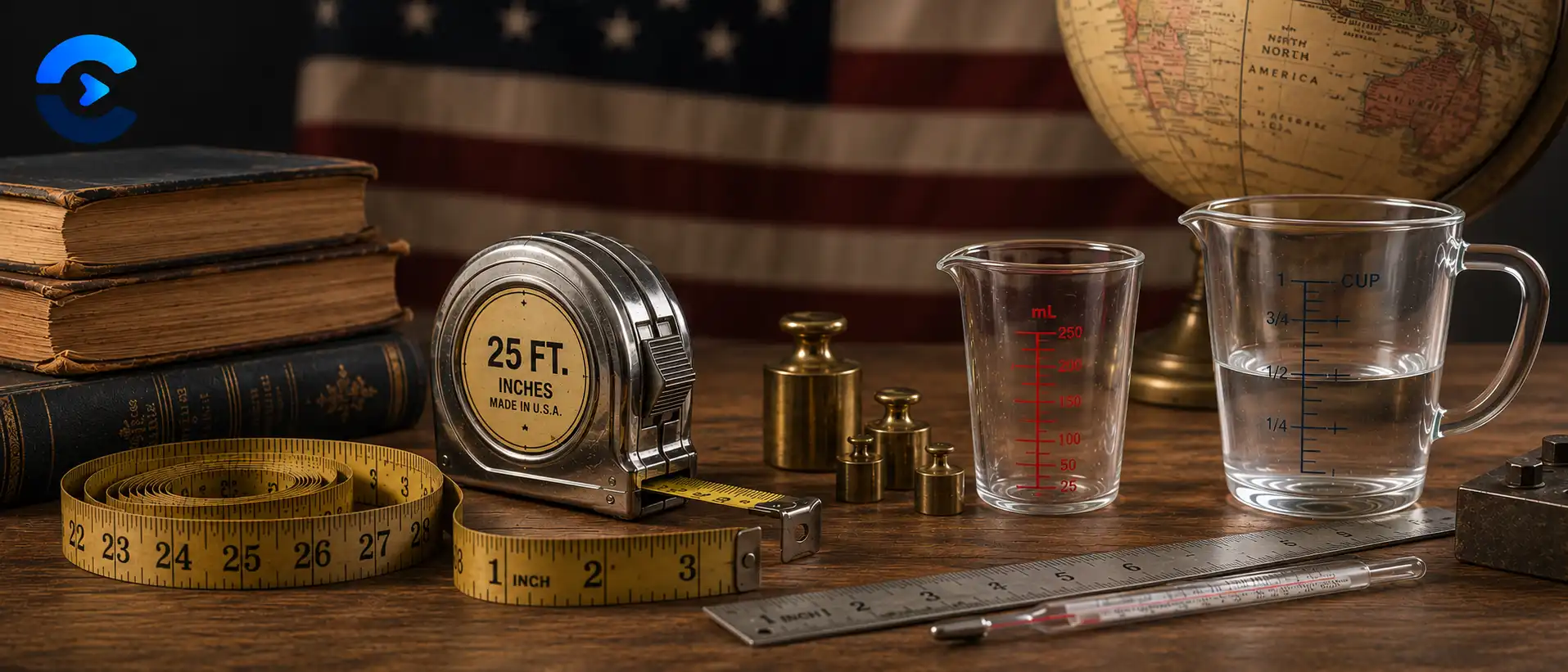
Why Does the US Use Imperial Units? The Real History
Why Does the US Use Imperial Units? The Real History The United States still uses imperial units mainly because a serious 1970s push toward metric conversion ran into the enormous

Why Recipes Use Different Measurement Systems Worldwide
Why Recipes Use Different Measurement Systems Worldwide Recipes use different measurement systems worldwide because two different goals are being served at once: professional and European bakers weigh ingredients in grams

Traveler’s Guide to Quick Unit Conversion Tricks for Travel
Traveler’s Guide to Quick Unit Conversion Tricks for Travel The quick unit conversion tricks for travel that actually stick: double the Celsius reading and add 30 for a rough Fahrenheit

Other Posts
Why the number changed and whether you should worry
Conversion looks like the most boring topic on the site until a rounded factor turns into a costing error, or two people in the same meeting quote a file size that differs by seven percent and both are right.
Most unit mistakes are not arithmetic mistakes. They come from using a factor that is close enough for a school exercise and wrong for anything that gets signed off. A kilometre is not 0.6 miles, a kilogram is not 2.2 pounds, and once those approximations are multiplied by a few thousand units they stop being harmless.
Then there is the digital side, where the confusion is definitional rather than numerical. A kilobyte is 1000 bytes to a drive manufacturer and 1024 to your operating system, which is the entire reason a new one terabyte disk shows up as roughly 931 gigabytes and nothing is broken. Megabits and megabytes differ by a factor of eight, which is why a 100 megabit connection downloads at about 12 megabytes per second on a perfect day.
These guides explain where each factor comes from, which ones are exact by definition and which are measured, and when the difference is large enough to matter for what you are doing.
What you will find here
- Where each conversion factor actually comes from and how exact it is
- The decimal versus binary confusion in storage and transfer speeds
- Practical rounding advice, including when rounding is the honest choice
- Comparisons of units that measure similar things but are not interchangeable
Questions about unit converters blog
Short answers to what readers ask most about this category and the tools behind it.
Almost always rounding. Some tools use a shortened factor, some round the result to a fixed number of decimals, and some do both, which compounds the error. Our converters use the full defined factor and round only at display time, so the difference from a reference value stays in the last decimal rather than the second one.
Some are exact by definition: one inch is exactly 25.4 millimetres, one pound is exactly 0.45359237 kilograms. Others depend on a measured constant or a chosen standard, which is why the guides say which category a factor falls into. It matters when you chain several conversions together and the small errors accumulate.
Because the manufacturer counts a terabyte as 1000 to the power of four bytes and your operating system counts it as 1024 to the power of four. Nothing is missing and nothing is faulty. The Data Storage Converter shows both interpretations side by side so you can see exactly where the gap comes from.
Yes, a factor of eight, and it is the single most common cause of people thinking their internet connection is underperforming. Connection speeds are quoted in megabits per second, file sizes in megabytes. The Data Transfer Speed Converter handles the conversion, and the guides explain why the two units exist at all.
The factors are correct to full precision, so the arithmetic will hold. What the tool cannot know is your required significant figures or measurement uncertainty, both of which are yours to apply. For anything that gets certified, treat the result as a check rather than as the source of record.
Once the page has loaded, yes. All conversions are pure JavaScript running on your device, so nothing is sent anywhere and a dropped connection does not stop the tool working.