

Math and Numbers Blog: Formulas Made Simple
How Insurance Premiums Are Calculated Probability Basics
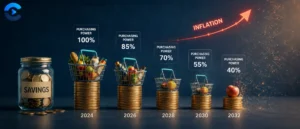
How Insurance Premiums Are Calculated Probability Basics How insurance premiums are calculated probability wise comes down to one core formula: multiply the chance an event happens by what it would
Percentage Change vs Percentage Points: Why It Matters
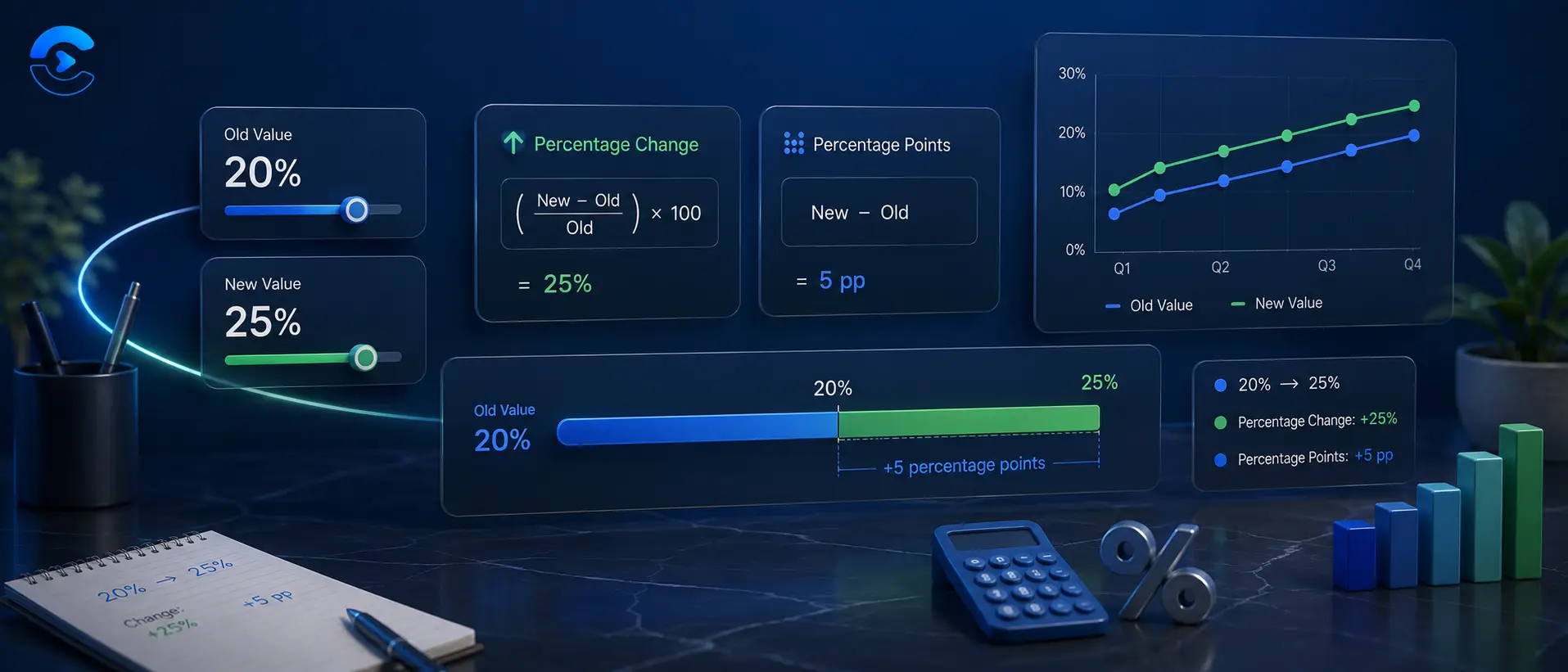
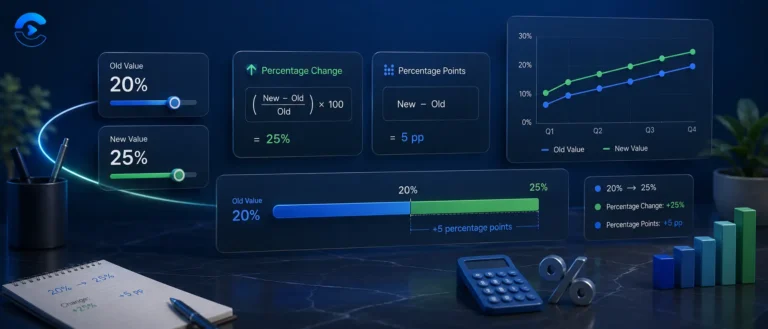
Percentage Change vs Percentage Points: Why It Matters When interest rates rise from 4 percent to 5 percent, headlines often call that a 1 percent increase, but the honest number
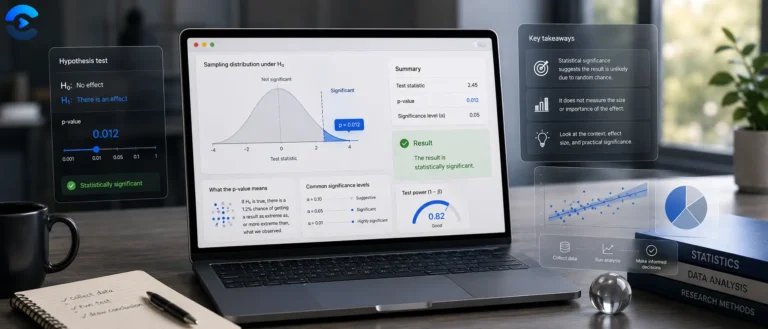
What Does Statistically Significant Mean? In Plain English
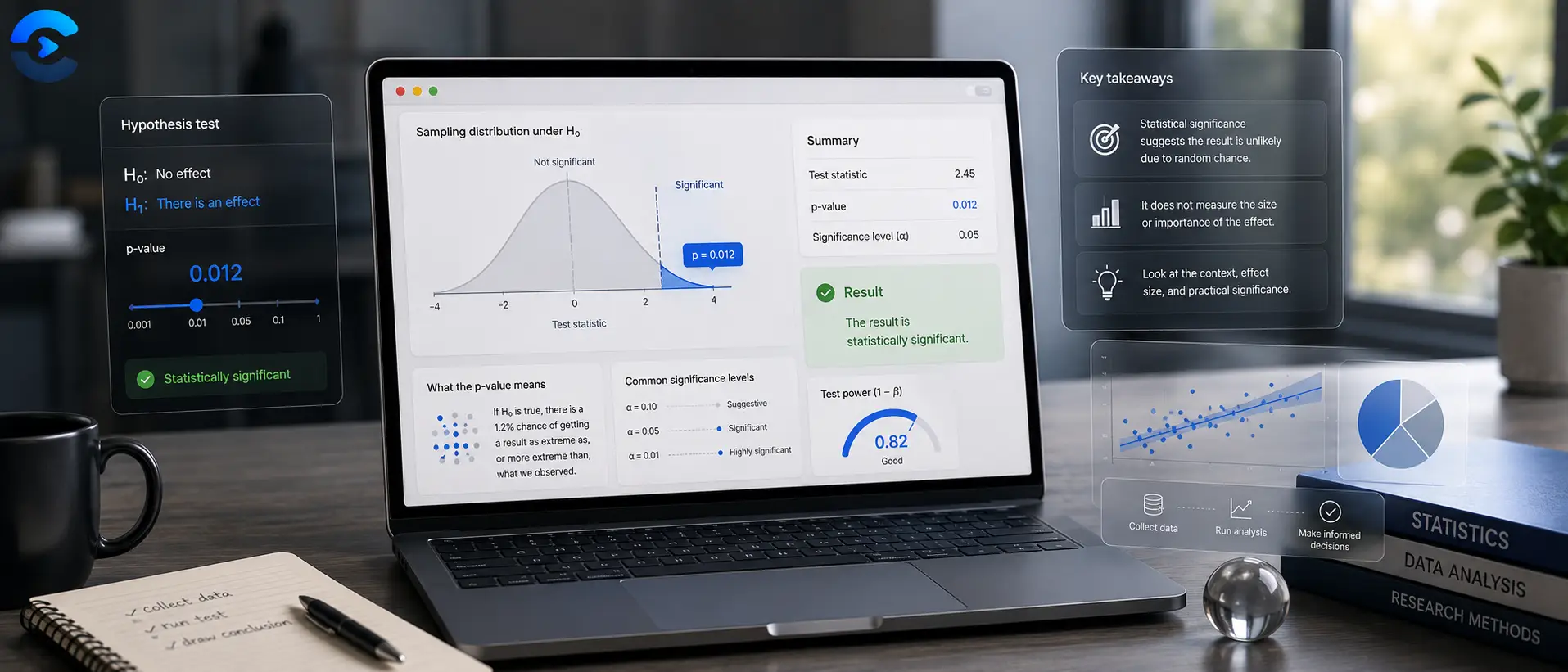
What Does Statistically Significant Mean? Plain English So what does statistically significant mean in plain terms. It means a result is unlikely to have happened by random chance alone, based

Other Posts
The arithmetic people quietly get wrong at work
Nobody forgets how to multiply. What goes wrong is percentages, base conversion and statistics, usually in a spreadsheet, usually in front of other people.
Percentages cause more errors than anything else on this list, because two questions that sound the same are not. A percentage change from 40 to 50 is a 25 percent increase, while from 50 to 40 is a 20 percent decrease, and a 20 percent discount followed by a 20 percent increase does not return you to the original price. These posts work through the cases where intuition fails, particularly percentage points versus percent, which turns up in every rate comparison.
Base conversion is the developer facing half. Hexadecimal exists because one hex digit maps exactly to four bits, which is why colour codes, memory addresses and permission flags all use it. Once that clicks, reading hex stops being a translation exercise.
The statistics posts are deliberately narrow and practical. When the mean lies and the median does not, what standard deviation is actually telling you, how big a sample needs to be before a result means anything, and why a confidence interval is a statement about the method rather than about the truth.
What you will find here
- Percentage explainers covering the cases that trip people up
- Binary, hex and octal explained through what they are for
- Statistics for people who need to interpret a number, not derive it
- Number theory topics such as primes, GCD and LCM in plain terms
Questions about math and numbers blog
Short answers to what readers ask most about this category and the tools behind it.
If a rate moves from 4 percent to 6 percent, that is a rise of 2 percentage points and a rise of 50 percent. Both statements are true and they describe very different things, which is why the choice between them is a favourite of anyone presenting a number in the most flattering light available.
Because each percentage is applied to a different base. Take 100, remove 20 percent and you have 80. Add 20 percent of 80 and you get 96, not 100. To reverse a 20 percent discount you need a 25 percent increase, and the Percentage Calculator handles that direction directly.
Whenever the distribution is skewed or contains outliers, which covers most salary, price and response time data. One very large value drags the mean upward while leaving the median where most of the data actually sits. Reporting both, and the standard deviation, is more honest than picking whichever supports your point.
It depends on your population size, the confidence level and the margin of error you can live with. For a large population, roughly 384 responses gives a 95 percent confidence level with a 5 percent margin of error. The Sample Size Calculator works it out for your specific case.
Because one hex digit represents exactly four bits, so two digits cover one byte cleanly. That maps far better onto how computers store data than decimal does, which is why you meet hex in colour codes, memory addresses and permission flags rather than anywhere else.
No. Each post starts from a situation rather than a formula, and where notation is unavoidable it is introduced rather than assumed. If you can read a spreadsheet you can read these.