













Blog

Free Online Tools Blog: Increase Your Productivity

What Is HMAC Used For? Why APIs Need Signed Requests

What Is HMAC Used For? Why APIs Need Signed Requests So what is HMAC used for? HMAC, hash based message authentication code, is used to prove a request or payload
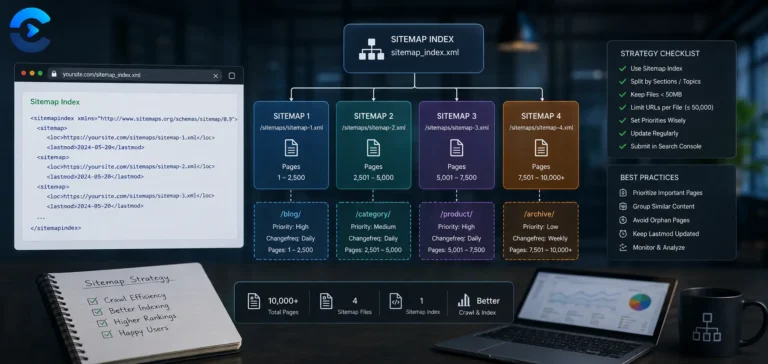
Sitemap Strategy for Large Websites (10K+ Pages)

Sitemap Strategy for Large Websites (10K+ Pages) A sitemap strategy for large websites means splitting your URLs into multiple sitemap files grouped by content type or date, linking them together
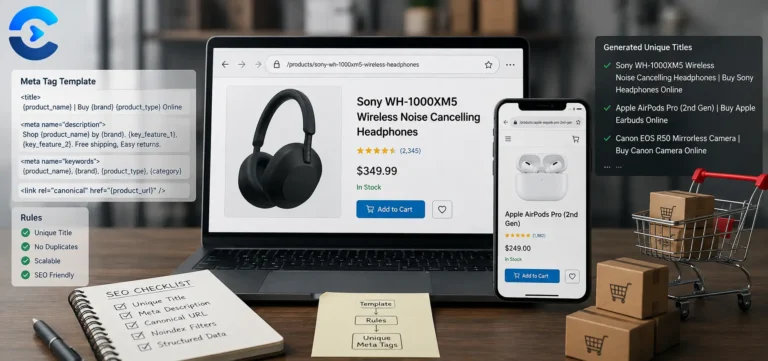
Meta Tags for Ecommerce at Scale Without Duplicate Titles

Meta Tags for Ecommerce at Scale Without Duplicate Titles Getting meta tags for ecommerce at scale right means replacing static, hand written titles with a template built from product attributes,

Broken Link Checklist After Site Migration: 90 Day Plan

Broken Link Checklist After Site Migration: 90 Day Plan A broken link checklist after site migration should not stop on launch day. Check again at day 1, week 1, day

Ping vs Traceroute vs Port Scan: Fixing Network Issues

Ping vs Traceroute vs Port Scan: Fixing Network Issues When a connection fails, run three checks in order: ping first to confirm the host is reachable, traceroute second to see

The Effect of Inflation on Savings, Shown With Real Numbers

The Effect of Inflation on Savings, Shown With Real Numbers The effect of inflation on savings is that cash sitting in a low interest account loses buying power every year,

SIP Step Up Calculator Strategy for Yearly Increases

SIP Step Up Calculator Strategy for Yearly Increases A sip step up calculator strategy means raising your monthly SIP contribution by a fixed percentage every year instead of keeping it

BMI BMR Calculation for Seniors: What Changes After 60

BMI BMR Calculation for Seniors: What Changes After 60 A bmi bmr calculation for seniors reads differently than the same numbers in a younger adult, because muscle naturally declines with

Hashing vs Encryption Difference: What Developers Get Wrong

Hashing vs Encryption Difference: What Developers Get Wrong The core hashing vs encryption difference comes down to one question: do you ever need the original value back? Hashing is a

How to Calculate Macros for Cutting, Bulking, or Maintaining

How to Calculate Macros for Cutting, Bulking, or Maintaining To calculate macros, first find your daily calorie target, then split that number into protein, carbohydrate, and fat grams based on

📚 About this blog

The reasoning that does not fit on a tool page

Every tool on ConvertNow answers one question in a second. This is where the longer answers live: why the number came out that way, what the format was designed for, and when the tool is the wrong thing to reach for.

A tool page has a job and that job is to get out of your way. It should load, take your input and give you an answer before you have finished reading the heading. What it cannot do is explain why a 20 percent discount followed by a 20 percent rise leaves you short, or why your hard drive shows 931 gigabytes when the box promised a terabyte, or why the same JSON file parses in one language and fails in another. Those answers need paragraphs.

So the writing here sits deliberately behind the tools rather than in front of them. Each post is anchored to a real task, usually one that somebody emailed about after losing an evening to it, and it links to the tool that does the job so you can test the idea on your own data while you read.

Twelve categories run in parallel with the tool library: developer topics, unit conversion, finance, text and content, image and design, dates and time, security, health and fitness, SEO and marketing, maths and numbers, files and documents, and networking. A handful of posts sit across several at once, which is usually a sign the topic is more interesting than its category.

There is no publishing schedule and no filler. Posts appear when there is something worth explaining, which in practice means most weeks.

What you will find here

  • Explainers that go past the definition into why it works that way
  • How to guides tied to a specific tool you can open alongside
  • Comparisons run on one identical scenario, so the difference is visible
  • Myth busters, for the advice that gets repeated and was never true
FAQ

Questions about this blog

Who writes it, how topics are chosen and how the posts connect to the tools.

One person. Prateek Zare, an independent software developer based in Berlin, who also builds and maintains every tool on the site. There is no content team and nothing is outsourced, which is the main reason the posts stay tied to problems that actually came up rather than to a keyword list. More on the about page.

Mostly from email. Somebody describes an evening they lost to a problem, and if the explanation they needed does not exist anywhere decent, it becomes a post. The rest comes from questions that keep arriving about a specific tool, which usually means the tool page is not explaining itself well enough.

Not for most of them. Categories such as finance, health, dates and maths are written for anyone. Developer, security and network posts assume more, but each one states its assumptions at the top rather than letting you discover them halfway through.

They are drafted and edited by a human who has done the thing being described. Where a tool result or a code sample appears, it has been run rather than imagined, and where a standard is cited it has been read. That is the bar, and if a post ever falls short of it, tell us and it gets fixed.

Directly. Almost every post is anchored to one or more of the free tools, and links to them at the point where you would want to try the idea yourself. The tool gives you the answer, the post tells you whether the answer means what you think it means.

Short quotes with a link back are welcome and no permission is needed. For anything longer, or for translation or syndication, email [email protected] first. The tool output itself is a different matter and is entirely yours, with no attribution required.

Most weeks, without a fixed schedule. Existing posts also get corrected and updated when something changes, and a post that is materially out of date is either fixed or removed rather than left to quietly mislead people.

Privacy Overview

Cookies let this site remember your preferences and show us which tools people actually use. Full detail sits in our Privacy Policy.