
Blog
Guides on Analytics, Development and Everyday Tools
-
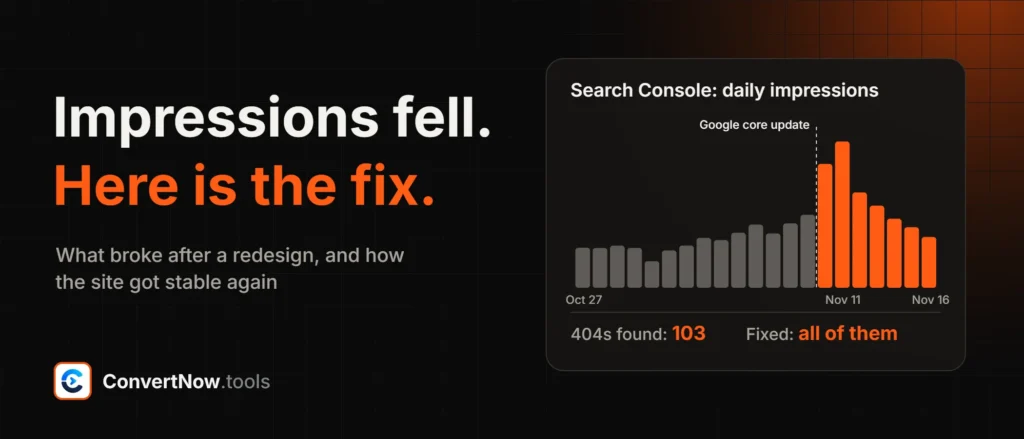
Traffic Drop After Website Redesign: 5 Proven Fixes
My impressions fell 65 percent in five days after a redesign. Here are the 5 real causes, from 103 broken URLs to a hidden title override, and how I fixed each one.
Latest articles
-

What an IP Lookup Can and Cannot Tell You
IP lookup explained in 8 clear answers: what it shows, how accurate the city is, why results look wrong, and what it can never…
-

Cookie Consent Terms Every Site Owner Should Know
Cookie consent explained through 12 key terms: strictly necessary cookies, prior consent, opt in, dark patterns and more, with tables that connect each idea.
-

Hex to Decimal Explained: Simple Guide With 12 Examples
Hex to decimal explained from scratch: what base 16 is, why it exists, step by step conversions, colour codes and a short glossary.
-

KM/H to MPH Explained: A Simple Guide With 12 Examples
Learn km/h to mph from scratch: what speed units mean, the exact factor 0.621371, easy mental shortcuts, knots, Mach and 12 clear worked examples.
-
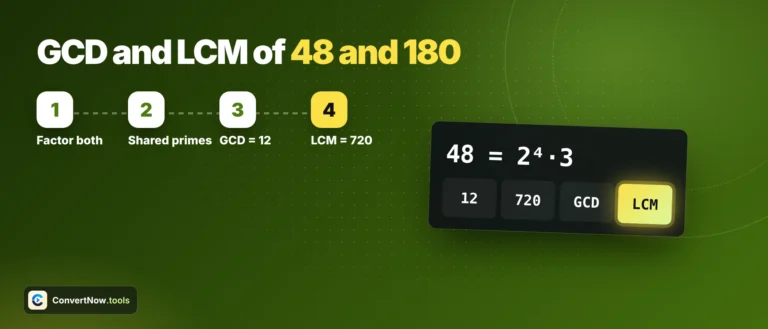
GCD and LCM: A Simple 7 Step Playbook That Works
GCD and LCM made simple: a 7 step playbook with checklists, the Euclidean method, worked problems on tiles, schedules and fractions.
-
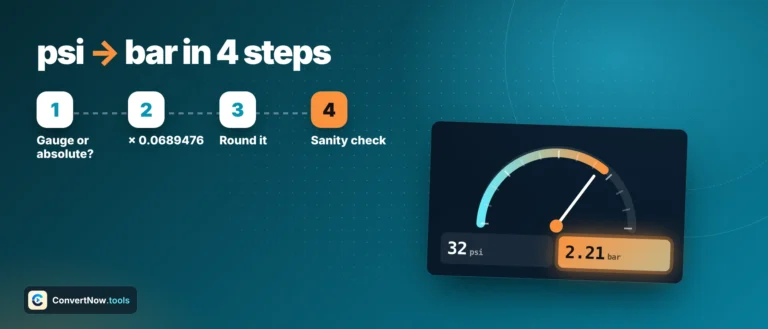
PSI to Bar: 8 Step Playbook for Safe, Exact Readings
PSI to bar in one step: multiply by 0.0689476. This playbook adds 8 checks, two interactive checklists and worked tyre, scuba and washer examples.
-
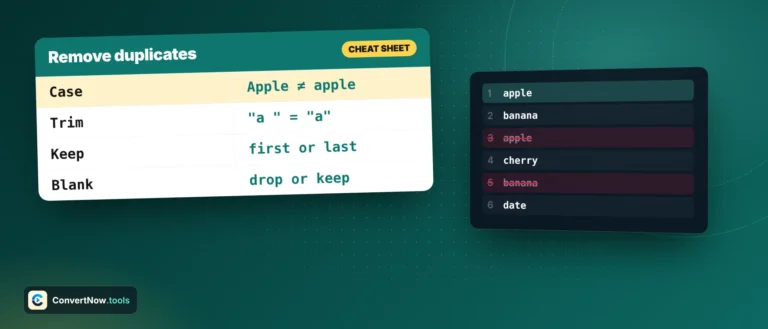
Remove Duplicate Lines: Quick Cheat Sheet With 13 Fixes
Need to remove duplicate lines fast? This cheat sheet covers the options that matter, one line commands, spreadsheet formulas and common traps.
-

Why Your Open Graph Image Is Not Showing
Open graph image not showing in link previews? Match your symptom to its cause, then apply the exact fix, from image size to cached…
-

Fixing JWT Expired Errors Behind a 401
JWT token expired but the exp claim looks fine? Read the claims, check clock skew, units and audience, and fix the cause with a…
Browse Blogs by category
The reasoning that does not fit on a tool page
Every tool on ConvertNow answers one question in a second. This is where the longer answers live: why the number came out that way, what the format was designed for, and when the tool is the wrong thing to reach for.
A tool page has a job and that job is to get out of your way. It should load, take your input and give you an answer before you have finished reading the heading. What it cannot do is explain why a 20 percent discount followed by a 20 percent rise leaves you short, or why your hard drive shows 931 gigabytes when the box promised a terabyte, or why the same JSON file parses in one language and fails in another. Those answers need paragraphs.
So the writing here sits deliberately behind the tools rather than in front of them. Each post is anchored to a real task, usually one that somebody emailed about after losing an evening to it, and it links to the tool that does the job so you can test the idea on your own data while you read.
Twelve categories run in parallel with the tool library: developer topics, unit conversion, finance, text and content, image and design, dates and time, security, health and fitness, SEO and marketing, maths and numbers, files and documents, and networking. A handful of posts sit across several at once, which is usually a sign the topic is more interesting than its category.
There is no publishing schedule and no filler. Posts appear when there is something worth explaining, which in practice means most weeks.
What you will find here
- Explainers that go past the definition into why it works that way
- How to guides tied to a specific tool you can open alongside
- Comparisons run on one identical scenario, so the difference is visible
- Myth busters, for the advice that gets repeated and was never true
Questions about this blog
Who writes it, how topics are chosen and how the posts connect to the tools.
One person. Prateek Zare, an independent software developer based in Berlin, who also builds and maintains every tool on the site. There is no content team and nothing is outsourced, which is the main reason the posts stay tied to problems that actually came up rather than to a keyword list. More on the about page.
Mostly from email. Somebody describes an evening they lost to a problem, and if the explanation they needed does not exist anywhere decent, it becomes a post. The rest comes from questions that keep arriving about a specific tool, which usually means the tool page is not explaining itself well enough.
Not for most of them. Categories such as finance, health, dates and maths are written for anyone. Developer, security and network posts assume more, but each one states its assumptions at the top rather than letting you discover them halfway through.
They are drafted and edited by a human who has done the thing being described. Where a tool result or a code sample appears, it has been run rather than imagined, and where a standard is cited it has been read. That is the bar, and if a post ever falls short of it, tell us and it gets fixed.
Directly. Almost every post is anchored to one or more of the free tools, and links to them at the point where you would want to try the idea yourself. The tool gives you the answer, the post tells you whether the answer means what you think it means.
Short quotes with a link back are welcome and no permission is needed. For anything longer, or for translation or syndication, email [email protected] first. The tool output itself is a different matter and is entirely yours, with no attribution required.
Most weeks, without a fixed schedule. Existing posts also get corrected and updated when something changes, and a post that is materially out of date is either fixed or removed rather than left to quietly mislead people.

