
Latest posts
-
Counting Instructional Days Academic Calendar Basics

Counting Instructional Days Academic Calendar Basics Counting instructional days academic calendar planning comes down to one method: start with the total number of calendar days in the school term, subtract weekends, then subtract every holiday and scheduled break your board has approved, and what remains is your instructional day count. Compare that number against your…
-
ISO Week Number Explained: Why Week 1 Shifts
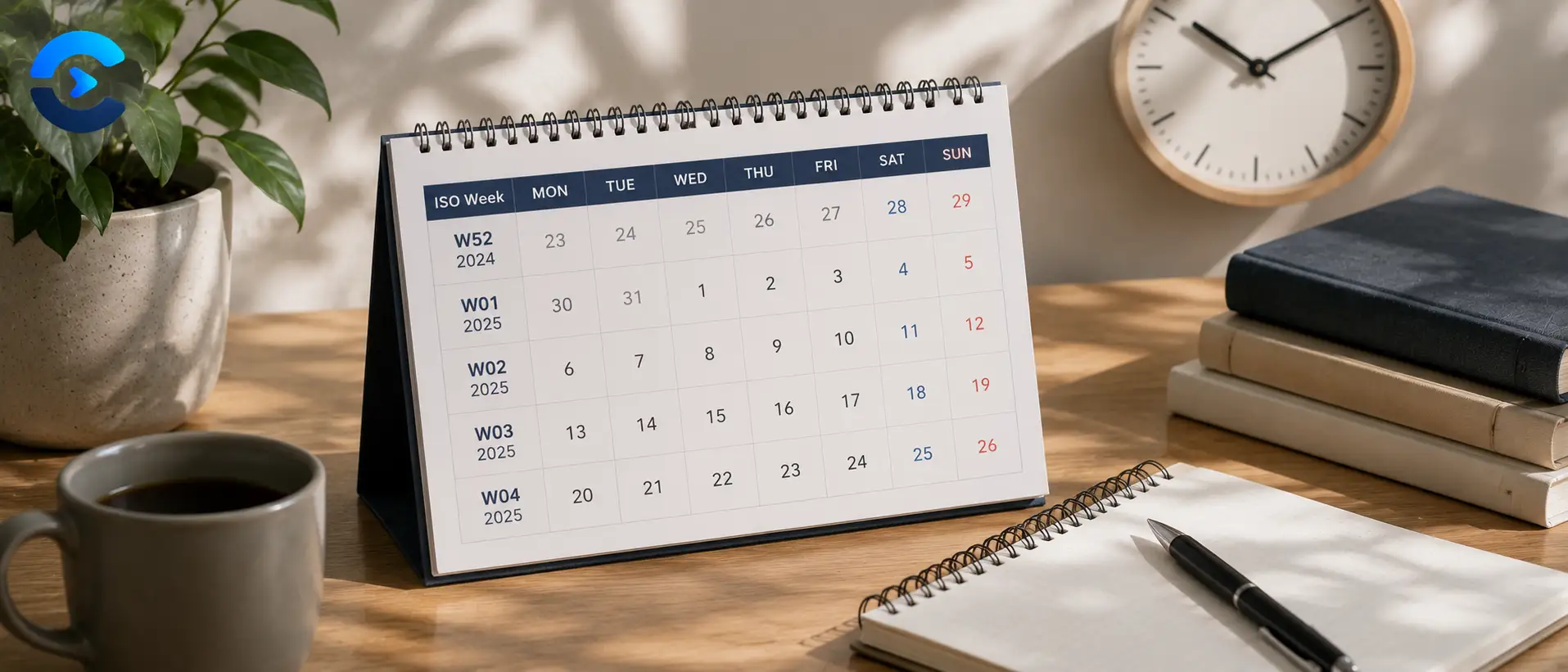
ISO Week Number Explained: Why Week 1 Shifts In the ISO 8601 standard, week 1 of a year is not the week that contains January 1. It is the week that contains the year’s first Thursday, which also means it is the week containing January 4. Weeks run Monday through Sunday, so if January 1…
-
How to Schedule Meetings Across Timezones Easily

How to Schedule Meetings Across Timezones Easily The fastest way to learn how to schedule meetings across timezones without errors is to stop converting pairwise between every participant’s local time. Instead, pick one timezone as your anchor, usually UTC or your own home base, place the meeting there first, and then convert outward to each…
-
Historical Dates: Unix Timestamp Before 1970 Explained

Historical Dates: Unix Timestamp Before 1970 Explained Standard Unix time counts seconds since January 1, 1970, so representing a unix timestamp before 1970 requires a negative number instead of the usual positive count. Most modern systems and programming libraries do support negative Unix timestamps for exactly this purpose, so a birthdate from 1952 or a…