

Why I Built Analytics Without Cookies
Every popular analytics tool asks the same thing of your visitors before they read a word: accept our cookies. I wanted analytics that did not need to ask.
Here is why I built ConvertNow Analytics without cookies, how it counts people anyway, and the honest trade offs.
Why the banner bothered me
I build sites for a therapist and a language school as well as my own tools site. On a therapy website, a cookie banner is the first thing a nervous visitor sees. On a tools site, it is one more click between someone and the answer they came for. In both cases it mostly exists so a third party can follow people across the web.
I wanted numbers for myself, not for an ad network.
How it counts without cookies
The plugin counts visits on your own server. Nothing is stored in the visitor's browser and nothing is sent to anyone else.
To tell one visit from the next, it builds a short lived key from a few request details, the site's local date and a secret salt, then hashes it. The key changes every day, so the same person tomorrow looks like a new visitor. Network addresses are never stored.
What you give up
Honest list:
- You cannot follow one person across days or weeks
- Returning visitor counts are an estimate, not an exact match
- No cross site tracking, which is the point
What you gain
- No consent banner needed for the analytics itself
- No third party script slowing the page down
- Bots and AI crawlers filtered out and listed by name
- Your visitor data stays in your own database
What my own numbers taught me
Before I trusted my plugin, I ran it next to Jetpack Stats on convertnow.tools. Jetpack read 25 to 40 percent higher. The difference was not missing people. It was my own editor previews, headless browsers, data centre traffic and prefetches that Jetpack counted and my plugin refused.
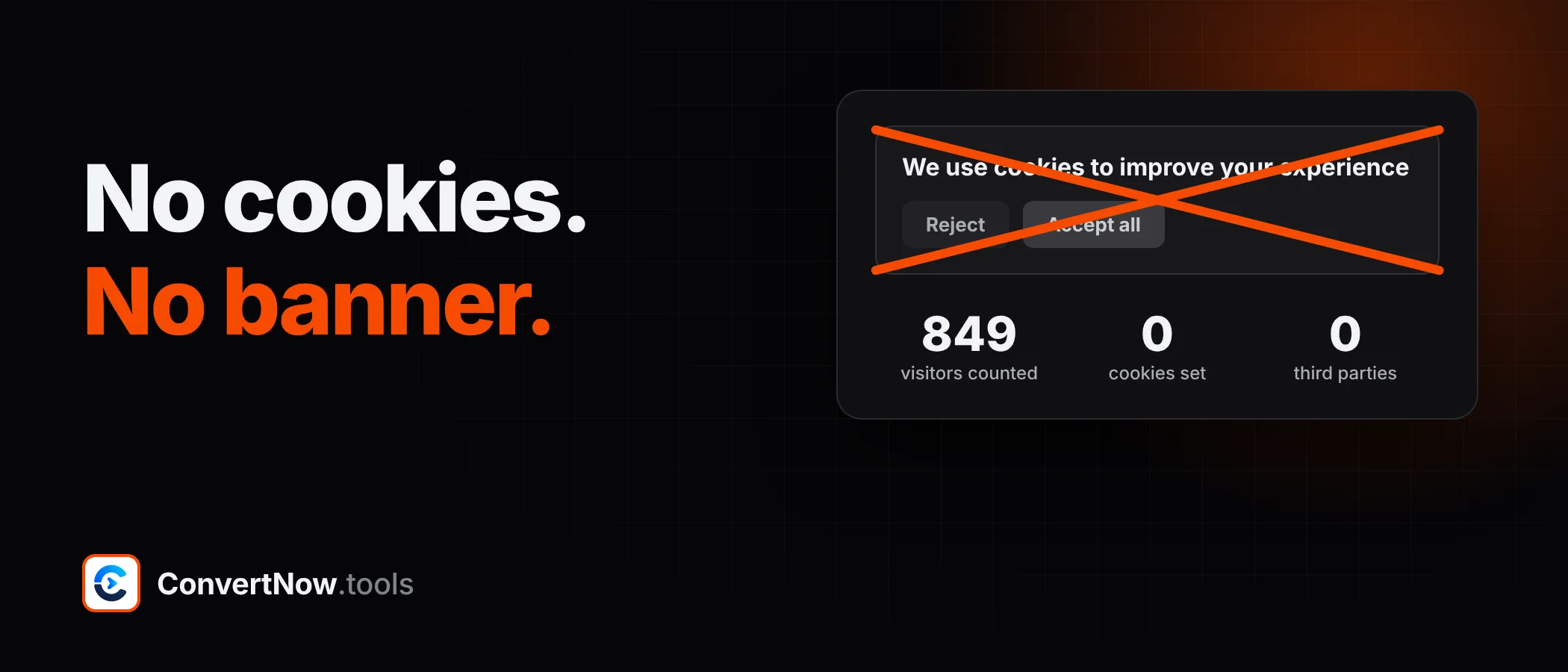
Over the last 30 days the gap is even starker: 849 human visitors against 22,090 refused machine requests. A cookie banner would have asked none of those machines for consent, and a typical tool would have counted many of them as readers.
What happened when I shared it
When the plugin went live on WordPress.org, I posted about it in r/WordpressPlugins and asked three questions: what people use for analytics today, whether they care about separating AI traffic from people, and what they wish their plugin did better. The post reached about 23,000 views and 54 comments.
The replies shaped the roadmap more than any planning I had done:
- One reader asked for a daily email report like Matomo has. The plugin only had weekly emails, so daily and other frequencies shipped soon after
- Another asked if it can tell Googlebot from a scraper. It can, and that report is now one of the most used screens
- Several people pointed out that Google Analytics connects to Search Console and Ads. That is on the roadmap, as long as it keeps data on your own server
- A few readers simply installed it on their own sites and reported back that the numbers matched what they expected
A week later, someone sent the first ever donation with a note saying they were running it on their site and loved it. For a free plugin with no paid tier, that meant a lot.
Where I use it
All my own sites run on it: convertnow.tools, elangerman.com and sitwithgayatri.com.
Try the free WordPress plugin, or ConvertDash if your site is not on WordPress.

